


Care to Translate
4.428.00 Reviews
App Specs
- Version
- 7.1.8
- Updated On
- License
- Free
- Downloads
- 500,000+
- Developer
- Care to translate
- Categories
- Medical
- Platform
- Android
Screenshots
 Analysis by AppCompare
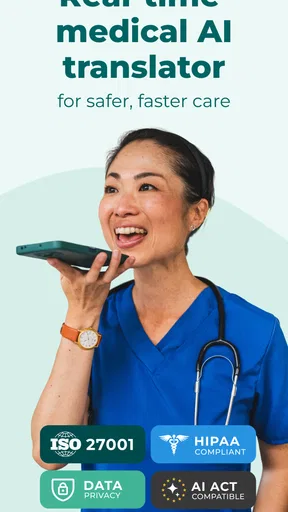
Have you ever found yourself in a situation where language barriers made communication a real headache? Well, let me introduce you to Care to Translate. This medical translation app is intended to help people communicate in healthcare settings. I see its strongest appeal in those moments when a patient and a care provider need a shared starting point for a conversation, not in replacing a trained interpreter or making a diagnosis. Its first-week appeal is easy to understand: a focused tool feels more useful than a general translator when the subject is health and the words matter.
Where the first-week appeal comes from
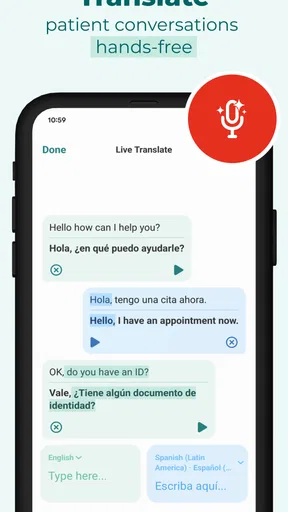
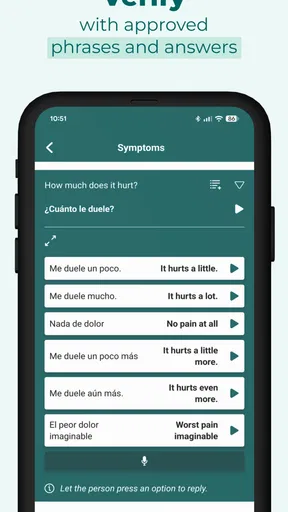
In a realistic everyday situation, a patient might arrive at a clinic and need to explain where discomfort is, when it began, or what they are worried about. A healthcare worker can use a relevant translated phrase to open that conversation, then listen for the patient’s response and clarify what remains unclear. That is a practical role for this kind of app: helping both people get past the first awkward exchange. It can also help a caregiver prepare a few questions before an appointment, so the conversation begins with a clearer plan.
That usefulness depends on how it is used. A translated phrase is a bridge, not proof that a complex explanation has been understood. I would use it to support simple exchanges and to identify where a professional interpreter or another communication method is needed. For consent, medication instructions, allergies, or other high-stakes details, I would not treat an app translation as the only safeguard. The more consequential the decision, the more important it is to confirm meaning in a way both parties can trust.
For people who work in care, the value can be less about translating a whole conversation and more about easing repeated small interactions: welcoming someone, checking basic needs, or helping a patient describe a concern. For a patient, it may be useful when preparing to speak with a provider or when a language mismatch makes a short exchange harder. It is less suitable for someone seeking a general-purpose travel translator, a tool for long conversations on any subject, or an alternative to qualified interpretation in a situation where precision is essential.
How to make a translation more useful
A helpful habit is to keep the conversation in short steps. Ask one clear question, allow time for the reply, and check the key point before moving on. A string of several questions can become difficult to follow even when each phrase is translated correctly. If a response is unexpected, try a simpler wording rather than assuming the translation has captured every nuance. This is especially important for symptoms, where a person’s description may not fit a ready-made phrase exactly.
It can also help to prepare mentally before a busy appointment or shift: identify the central question you need to communicate, and use the app as support for that exchange rather than improvising a complicated explanation under pressure. I would avoid relying on a translation alone to convey a full medical history. Writing down the important details in advance, where possible, gives both people another way to check what has been said.
Getting Started with Care to Translate
First off, downloading and setting up the Care to Translate app was a breeze. Available on both Android and iOS, it’s a quick download, and the installation process is as smooth as butter. Once you’re in, you’re greeted with a clean and intuitive interface. No unnecessary clutter here, which I appreciate because who has time to get lost in a maze of icons when you need a quick translation?
Worth Reading Before You Choose

EA SPORTS FC Mobile 26 Is a Bigger Football Game, but It Takes Time

Flipboard Shows What News Apps Must Do Beyond the Feed

Switching to Android Auto Means Rethinking Your Driving Routine

Google Calendar Makes a Crowded Week Easier to Manage

Ludo King Makes the Most of the Minutes Between Plans

Baby Panda World Brings Quick Play to Modern Phones, but Its Game Library Feels Busy
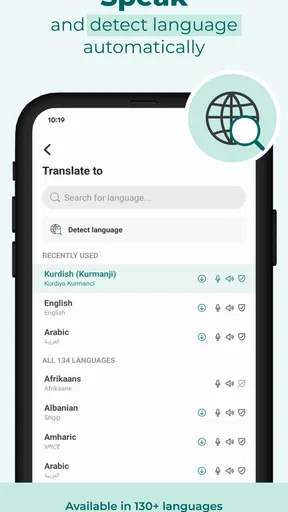
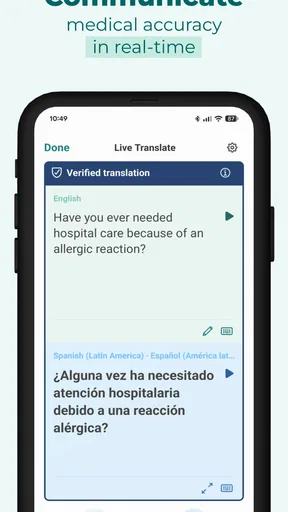
The app is primarily focused on healthcare, making it super specialized for those in medical professions or individuals who find themselves frequently needing medical translations. You can choose from a variety of languages—over 50, to be precise. What’s impressive is that these translations aren’t just word-for-word but are contextually accurate, which is crucial in medical scenarios.
Features That Stand Out
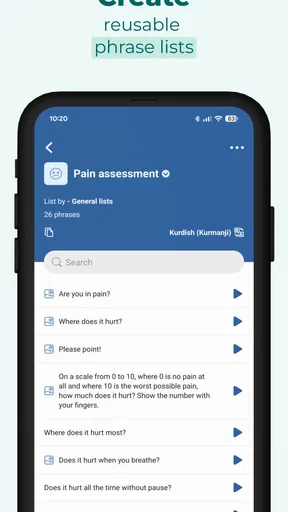
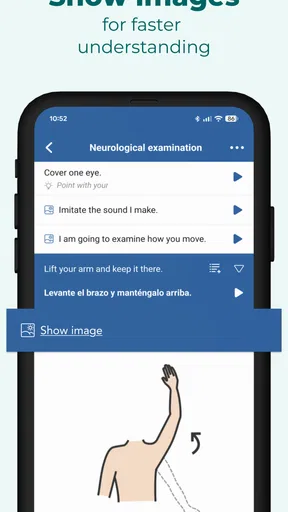
One thing I love about Care to Translate is the diversity of phrases it offers. You’re not just limited to basic greetings or questions; the app covers a wide range of medical terms and phrases. Whether you’re a doctor needing to explain a procedure or a patient trying to describe symptoms, there’s likely a translation ready for you.
The app also offers audio translations, which is a massive plus. I mean, who wants to fumble with pronunciations, right? Just tap on the speaker icon, and you’ll hear the phrase in the selected language. This feature can be a lifesaver—literally.
Why It’s More Than Just a Translator
Beyond its translating prowess, Care to Translate serves as a bridge between healthcare providers and patients. It empowers users by reducing misunderstandings and ensuring that everyone is on the same page. In situations where every second counts, having clear communication can make all the difference.
Another cool thing? The app works offline. Yes, you heard that right. You don’t need a Wi-Fi connection to access the translations, which is perfect for those remote areas where internet access is sketchy.
Using it alongside other options
Compared with a general translation app, a healthcare-focused tool can feel more relevant when the topic is symptoms or care. A general tool may be more flexible for directions, everyday conversation, or subjects outside medicine; a qualified interpreter is the stronger choice when a misunderstanding could affect treatment or consent. I would think of this app as a practical aid between those options, not a replacement for either one in every situation.
Offline access is particularly useful when connectivity is unreliable, but it does not remove the need to plan. Before depending on a tool during a real appointment or care interaction, I would check that the app is installed and usable on the device, and become familiar with how to reach the relevant translations. That small bit of preparation is more valuable than trying to learn the interface while someone is waiting for help.
My Personal Take
After using the app for a while, I’ve come to appreciate its reliability and ease of use. Sure, there are plenty of translation apps out there, but Care to Translate stands out for its focus on the healthcare sector. It feels like it was designed with real-world scenarios in mind, making it practical and user-friendly.
What’s more, the app is continuously updated. The developers seem committed to refining its features, which is always a good sign. They’re even keen on user feedback, so if you have suggestions, they’re all ears.
When usefulness turns into a habit
The bigger question is whether an app like this earns space on a phone after the initial novelty fades. I think the answer depends on how often someone encounters language barriers in care. A person who regularly supports patients across language differences may find recurring value in having a focused resource ready. Someone who only needs medical translation once in a while may be better served by installing it when a need arises and relying on an interpreter for the more demanding conversation.
Maintenance is modest but real: keep the app available, make sure the device is ready when needed, and avoid assuming that familiarity with one translated phrase covers every variation in a patient’s situation. The app is free to download, though it includes optional in-app purchases ranging from $12.99 to $179.99 per item. I would look carefully at what an optional purchase provides and whether it fits a recurring need before spending; occasional use does not automatically justify an ongoing commitment.
It is also worth separating a calm practice session from use under pressure. In a quiet moment, a user can learn how to navigate the app and listen to audio. During an urgent exchange, there may be little time to explore. That is why a simple personal routine—open the app before the conversation, make one point at a time, and confirm the important details—can matter as much as the translation itself.
Long-term fit and final thoughts
Care to Translate is a medical app from Care to translate, with an average rating of 4.4 from around 2.4 thousand ratings and more than 500 thousand installs. It is free, rated for Everyone, and its current version is 7.1.8, with Android 7.0 as the minimum operating-system requirement. It was released on March 15, 2019. Those details make it easy to see that it has an established audience, but popularity alone is not the reason I would keep it: the deciding factor is whether healthcare translation comes up often enough in your life or work to make a specialized tool worthwhile.
The app is not the right choice if you need guaranteed interpretation for a high-risk medical decision, or if your main need is translating broad, free-flowing conversation unrelated to healthcare. In those cases, a professional interpreter or a more general-purpose option may be more appropriate. For brief, practical exchanges, especially when internet access is a concern, it can be a useful support—provided you treat the output as a starting point and verify the meaning that matters.
In a world where communication is key, especially in critical fields like healthcare, having a reliable translation tool is invaluable. Care to Translate delivers on its promise, providing a comprehensive solution for breaking down language barriers. Whether you’re a healthcare professional or someone who travels often, this app could very well be the trusty sidekick you didn’t know you needed.
So, if you’re looking for an app that combines functionality with a user-friendly interface, give Care to Translate a shot. It might just become your go-to app for all things translation in the medical world. Trust me, this is one app you’ll want to keep handy!
Pros
- Easy-to-use interface for quick translations.
- Supports multiple languages for global use.
- Offline mode available for emergencies.
- Medical terminology is accurate and reliable.
- Continuous updates with new languages added.
Cons
- Limited to medical translations only.
- Some languages lack full offline support.
- Requires subscription for advanced features.
- No voice input for hands-free use.
- Occasional minor bugs in new updates.
FAQs for Care to Translate
What is Care to Translate, and how does it work?
Care to Translate is a medical translation app designed to bridge language barriers between healthcare providers and patients. It offers real-time translations of medical terms and phrases in multiple languages. The app is user-friendly and operates offline, ensuring accessibility in various healthcare settings without the need for internet access.
Is Care to Translate suitable for all healthcare professionals?
Yes, Care to Translate is designed for a wide range of healthcare professionals, including doctors, nurses, and paramedics. It provides essential medical phrases and instructions that can be used in hospitals, clinics, and emergency situations, making it a versatile tool for anyone involved in patient care.
How many languages does Care to Translate support?
Care to Translate supports over 40 languages, making it a comprehensive tool for dealing with diverse patient populations. The app continuously updates its language offerings to include more languages and dialects, ensuring that users have access to an extensive range of communication tools.
Is the app easy to use for non-technical users?
Absolutely. Care to Translate is designed with simplicity in mind, featuring an intuitive interface that allows users to quickly find and use translations. The app's straightforward design ensures that even those with limited technical skills can navigate it effortlessly, making it accessible for all healthcare providers.
Does Care to Translate require an internet connection?
No, Care to Translate does not require an internet connection. The app is fully functional offline, which is particularly beneficial in settings where internet access is unreliable. This feature ensures that translations are always available when needed, without any interruptions.


